Wednesday, September 3, 2014

What's In A Name?


As a person with chronic heartburn, I try to avoid hot, spicy, acidic foods. Rarely do I eat anything with hot sauce; the exception would be hot wings but I drown the chicken in blue cheese before I eat it!  Unlike me, I have friends who enjoy dousing  hot sauce on everything! One such friend is Carolina, aka Hot Sauce.

Hot Sauce and Catfish: One can only eat so many corn tortillas before they start tasting bad. Roasting tortillas over the fire to make them taste better. Even after dropping mine in the ash, it still tasted better than an non-roasted tortilla.

When hiking, people introduce themselves as an alias, otherwise known as a trail name. Some hikers choose their own trail names before they even step foot on the trail. Those who do not have trail names will eventually receive one. The theory is a trail name picks you. A trail name can describe your personality, your physical appearance, your traits, or it can be something completely random that simply sounds cool.

Spring 2013, I went by the trail name Leap Frog. This name was given to me by another hiker, Cinderella.  For a two day stretch, Cinderella and her crew would wake up at the crack of dawn, pack up and hike out, all while I was still nestled in my warm sleeping bag. A few hours after hitting the trail, I would catch up with her crew and pass them. 30 minutes after passing Cinerealla, I would stop for lunch. Since they already had lunch, they would find me relaxing on the side of the trail eating my pepperoni and cheese tortilla wrap (this was my favorite lunch until the grease in the pepperoni started causing heartburn issues). After a lunch, a bathroom break, and filtering 2 liters of water I would step back onto the trail to finish the last 6-7 mile stretch before I ended the day. As I made my way to the shelter, guess who I passed on the trail…Cinderella. Given that we would repeatedly pass each other on the trail, she dubbed me the name “Leap Frog”.

Cinderella, Nightingale, Leap Frog: getting ready for bed and its not even dusk out. It was cold this evening so going to bed early keeps you warm. This is when most of my reading and journal entries get accomplished. 

Trail names I remember from Spring 2013 are: Hot Sauce, Catfish, Happy-Grumpy, Thor, Wake-N-Bake, Cinderella, Nightingale, Red Specs (A German friend who wore red glasses), Jolly Rancher, Hawaii, Surfer Dude (a guy from WI who has never been surfing but he had flowing blond hair and a tan), Stoopid, Thistle, Turtle (turtle was a very common name), Caboose, Sassafras (another common name),  Daypack, Sugar Buns, Sky, Boomerang, Teach.


A group of hungry hikers at the Pancake Breakfast in Franklin, NC.


Surfer Dude (on the left) and Hawaii (on the right) enjoying an afternoon lunch break.


 Daypack (I think), Thor, and Catfish riding in the back of the van while Happy-Grumpy, Hot Sauce, and I sit on the bench seat as we Yellow Blaze it back to the trail. Happy to be leaving Gatlinburg, TN! 


Thor and Happy-Grumpy: A hardcore hiking duel from NC. If they aren't hiking, they are surfing in the Outer Banks. 


Ending with a picture of Catfish and Hot Sauce freezing their bums off in the shelter (She probably won't be happy with me posting this picture).


Tuesday, August 26, 2014

All Work No Play


Five months ago, I starting working in Springfield, IL as a park guide at Lincoln Home NHS and haven’t had much time to go on any exciting adventures. With no nearby mountains to climbs or rock faces to scale, I found it difficult to adjust to my new urban environment.  I now spend my free time playing disc golf (Springfield has four 18-hole courses to choose from!), riding my brand new bike along the bike path, working on my cardio endurance at the gym (gotta stay in shape for future hiking trips), and when a friend’s softball team is down one female, I fill the spot.

Earlier this month, I finally took some annual leave so I could return to Wisconsin and be reunited with my family.  The Grimme-Witter Family Reunion took place on the first weekend of August and there was NO WAY that I was going to miss it!
My Checklist for the family reunion weekend


 Uncle Joe owns the family farm and for the past few years the farm has been the location for the family reunion. Year after year, the reunion keeps getting bigger and better.

A view of the reunion 
 As always, we took rides on the four wheeling trails, popped up tents, slept in campers, sat around the bonfire, and had Saturday night fireworks.


 In addition to the standard activities, this year, we also had, a wagon ride, horse rides, a bouncy house, and my favorite… the 75 FOOT WATER SLIDE!!!!


My niece horse back riding


I am proud to report that my Weekend To-Do checklist list was complete and I am counting down the day to the next Grimme-Witter Family Reunion!!!


Sunday, March 16, 2014

Shark Teeth in Florida?

While in Florida, visiting my Godparents, I was fortunate enough to spend a day at the South Brohard Beach in Venice. The day was filled with sun, sand, crashing waves, sting rays, shark teeth, and a few minutes of kite flying.


Did you know that Venice, Florida is known as the Shark Tooth Capital of the World?  I'm not sure why soo many teeth can be found along the beaches of Venice but I do know that shark can lose up to 30,000 teeth in a lifetime. Unlike us humans, sharks have rows of teeth, one right behind the other. When a shark loses a tooth, the one behind it fills in the gap. Wouldn't it be nice to have an endless supply of teeth? Below is a picture of a sand tiger's pearly whites...
Notice the rows of teeth

There are a few ways of collecting shark teeth. As you walk along the beach, you can find some mixed in with the shells, seaweed, and plastic waste recent waves pushed to shore. If you want to stay stationary, you can collect a bucket full of sand as sift through it with the use of some kind of colander or mesh screen. If neither of these options sounds appealing to you, you can do what many others do...stand in the water, collect a bucket of sand, and sift through it. I didn't have a high tech sand flea rake or a floating screen (typically homemade) so I used a small, blue wire basket Aunt Pat picked up at the local Goodwill.
Used for collecting sand and shells

A homemade screen used for sifting

Using my aunt's blue wire basket :)

Overall, the wire basket worked well for finding shark teeth. I would stand in waist deep water, scoop up some sand, gently sway the basket back and forth under the water while the sand and small debris washed away. I found at least one tooth for every 2 to 3 scoops. Once, I even found a fish!


I'm not sure how many teeth I actually collected but I am happy with what I found. If you quickly scroll back up to the picture with all the teeth on it, take a look at the right hand corner of the picture and  you will notice that I also found some stingray tooth plate sections.

A closer look at some of the teeth

Above is a closer look at some of the teeth I found. They come in all shapes, sizes, and colors. Fossilized shark teeth are usually reddish/brown, black, or bluish/grey depending on the type of minerals found in the sediment that they were buried in. One of these days, I hope to find a free afternoon so I can sit down with a guide book and identify what type of teeth I have. Apparently, all of the teeth belonging to a individual species of shark look the same (unlike our teeth consisting of incisors, canines,  premolars, and molars). The only noticeable difference between the teeth in a shark's mouth is the size, not the shape. Once I learn the difference between the shapes of the more common shark teeth found in Florida, it shouldn't take long to group them in to categories based on species.

Common fossils found

Aunt Pat and I spent almost the entire day in the water searching for teeth. The waves were gentle and the sun was bright, making it a relaxing and therapeutic activity. For excitement, we were constantly visited by a group of string rays swimming up and down the coast line in search of shrimp. At first, I was a bit intimidated by the string ray presence but I quickly learned that the string ray didn't care about me. I watched in amazement as a group of 12 string rays swam directly towards me, split into two groups about 3 feet away from me, pass by me on both sides, and regrouped a few feet past me.

I also learned string rays like to jump out of the water. If you've never seen string rays jumping watch this 14 second clip I found on YouTube!


Overall, it was a great day. We stayed until sunset, packed up, and headed home. Here are a few more photos of my beach trip...

South Brohard Beach

Uncle Cliff flying my new kite. He did great!
Shells and teeth left behind as the tide goes out to sea

Sunset :)

Tuesday, March 4, 2014

Snowbirds

“Snowbirds: A seasonal infestation of Yankees (as well as Midwesterners and Canadians) in sunny warm states in the South such as Florida. A snowbird is an elderly Yankee that migrates down to the South to winter when their natural habitat of New York, Ohio, or Michigan is too cold for them. Their migration begins in early September and lasts until April.”  (urbandictionary.com)

Urban dictionary sure does have a way with defining terms! Last December, my Godparents partook in their first migration south, Brandon, Florida to be exact. Apparently 30+ winters in Green Bay, Wisconsin was enough for this newly retired couple. Thanks to the 2014 polar vortex, I finally talked myself into visiting them before my new job starts. I plan to be back home Friday night or Saturday morning and I have to report for my first day of work bright and early on Sunday. 3 days from now, I'm hoping I have enough will power to leave this 70+ degree weather and head back to the snowy Midwest!!!


Brandon is a nicely located city with amazing attractions roughly an hour drive in all directions. The first item on my "Fun in Florida" list was manatee viewing, so we hopped into the van and headed to Apollo Beach. I saw a dozen or so manatees off in the distance. Shortly before the park closed, a manatee decided to bless us with its presence in the shallows near the shore. I also spotted a green heron near the shore waiting patiently for fish to swim over to it.


After that, we hopped back into the van, drove across Sunshine Skyway Bridge (the bridge in the photo behind the old people) and ended up following some street signs that lead us to Fort Desoto Park. While beach combing, we found some interesting finds.

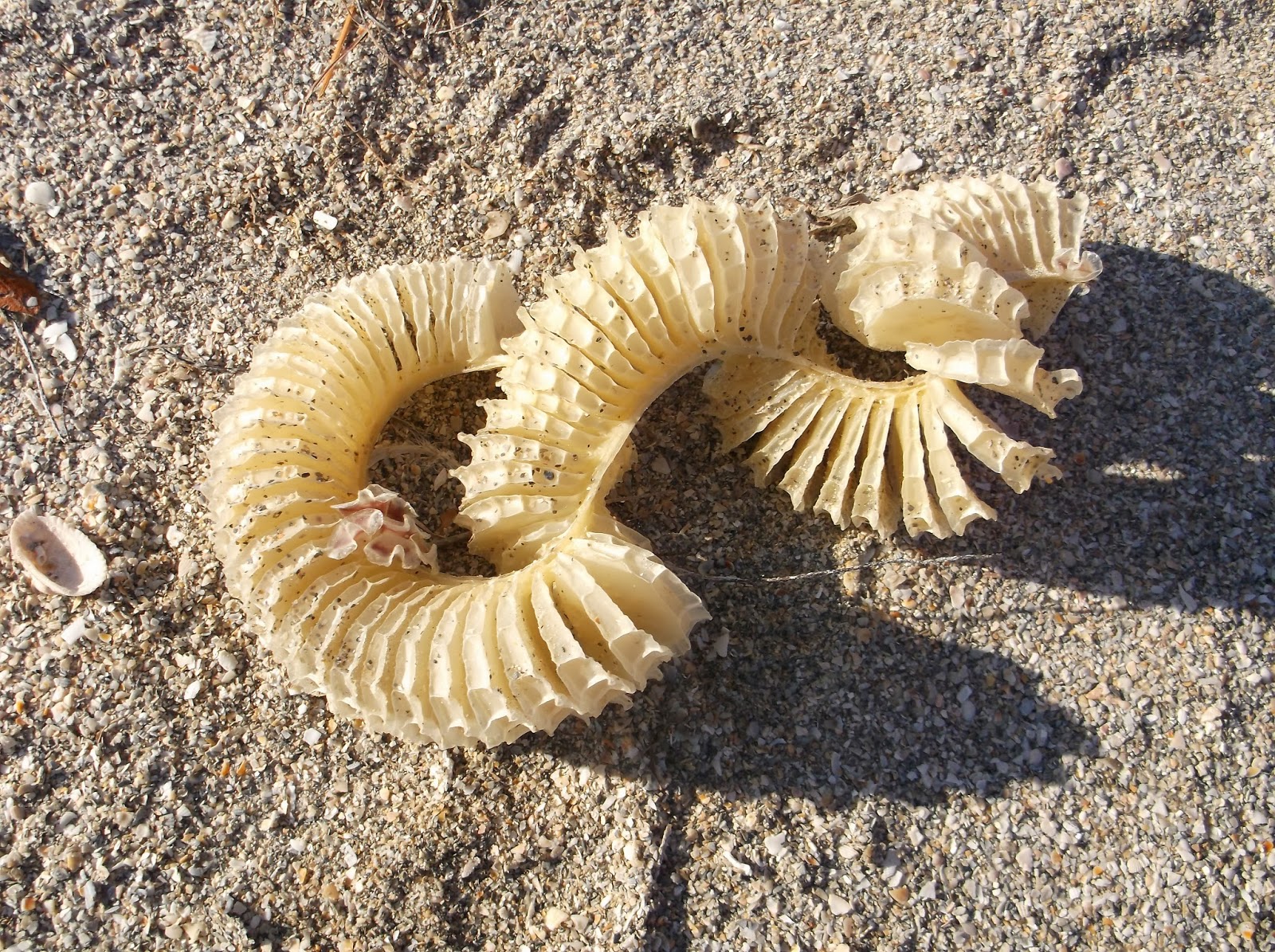
Whelk egg case
Internally fertilized eggs are surrounded by a transparent mass of albumen, a gel-like material, and are laid in protective flat, rounded egg capsules joined to form a paper-like chain of egg cases, commonly called a "Mermaid's Necklace".

American Oystercatcher
With its highly contrasting dark and white plumage, it is among the largest of North American shorebirds, measuring up to 18 inches in length, and weighing 21 ounces, with a 32-inch wingspan.

Brown Spiny Sea Star
Can often be found in the open because it seeks light. Commonly found in South and West Florida and Alabama.

A blob...

Not quite sure what this is. I'm thinking it is mesoglea, the layer of gelatinous material that separates the inner and outer cell layers of jelly like critters

On the north beach, the crashing waves left a rippled effect on the sand. Other than my time spent in the desert, I've never seen rippled sand like this before.


Tuesday, February 18, 2014

My Dog Sledding Adventure (An Overview)


For the past month and a half, I have been quite busy. I moved from Wisconsin to Illinois, went on an 8-day dog sledding/cross country skiing expedition in northern Minnesota, and am currently in the process of planning a trip to see my aunt and uncle in FL. Today’s post is going to focus on an overview of my trip to Minnesota.


On January 18th, at 8:05am, I boarded a plan in St. Louis, MO and was on my way to my final destination…Ely, MN. A few months back, I learned about a veteran program by Outward Bound offering vets, free of charge, adventure trips all over the United States. On these trips Vets have the opportunity to  "take part in wilderness expeditions that are physically, mentally and emotionally challenging in order to build the self-confidence, pride, trust and communication skills necessary to successfully return to their families, employers and communities following wartime service. These expeditions purposefully scaffold wartime experiences (carrying heavy packs, sore shoulders, rubbery legs, sleeping out, strange noises, sweat, dirt, frustration and anger) with authentic achievements to create positive emotional and mental outcomes."  

I was stoked about the trip, but, I didn't quite know what to expect. The course description stated hard work was to be expected but I thought to myself...Why would being pulled on a sled by dogs be hard work? I arrived at the Voyager Outward Bound base camp late into the evening on the 18th, was issued a bunch of gear and warm clothes to keep me warm during the 6 days we would be eating, sleeping, and traveling over frozen lakes within the Boundary Waters Canoe Area, and then went to bed in an unheated bunk house. I followed the guide to the bunk house, along with five other vets who were on the expedition with me. "Time to get use to sleeping in the cold,"  the guide said before shutting off the lights.


We woke up the next morning, ate breakfast, and got a crash on packing dogsleds and proper handling of the dogs. We were on the ice ready to start our cold, winter adventure by lunch. 


On our team we had a total of 12 dogs, 6 vets, and 2 guides. Each dog sled team was made up of 6 dogs and 2 mushers. 4 people at any given time were without a ride so they were responsible for cross country skiing in front of the sleds, breaking a trail through the soft, deep snow. 

Once we got to camp, the fun ended and the hard work began. We had to break a hole through the thick ice so we could have water for cooking, drinking, and hydrating the dogs. We had to collect and process enough wood for making dinner, breakfast, and keeping us warm while we dried out our wet or frozen gear. And finally, we had to set up our tent.


When morning came, we had to break down camp, feed the dogs, load the sleds, and do our best to hide our presence by covering the ash from the fire with snow, sprinkle fresh snow over the imprint of our tent, and relocate a night's worth of dog poop deep into the woods. According to Leave No Trace principles, one should leave as little impact as possible so others can enjoy natures beauty. If you would like to learn more about the Leave No Trace principles click here.